
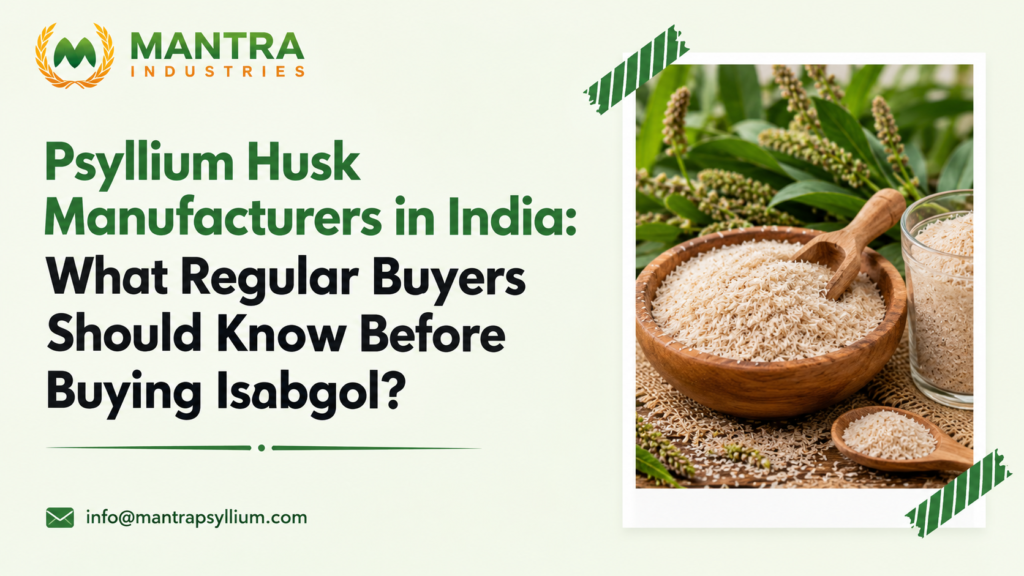
Psyllium Husk Manufacturers in India are an important sourcing option for businesses that need Isabgol for food products, dietary supplements, pharmaceutical formulations, and international distribution. However, finding a supplier is only the first step. Regular buyers also need to evaluate product quality, consistency, documentation, packaging, and long-term supply reliability.
Whether you are a wholesaler, importer, nutraceutical company, food brand, or pharmaceutical manufacturer, understanding these factors can help you make better purchasing decisions.
Why Is India an Important Source of Psyllium Husk?
Psyllium, commonly known as Isabgol, is obtained from the seeds of Plantago ovata. The husk contains soluble fibre and is widely used in products designed to increase dietary fibre intake.
India has an established psyllium processing and export industry, making it an important sourcing destination for domestic and international buyers. Manufacturers and processors supply different grades and product forms according to customer requirements.
For businesses purchasing regularly, the objective should be to find a supplier that understands the intended application and can maintain consistent product specifications across orders.
What Should Buyers Check Before Choosing a Manufacturer?
Not every psyllium husk product is suitable for every application. Before placing a bulk order, evaluate the following factors.
1. Product Quality and Purity
Quality is one of the most important considerations when selecting psyllium husk manufacturers in India.
Buyers should review product specifications, including purity, moisture content, foreign matter, microbiological parameters, and other relevant quality indicators. Requirements may differ depending on the product grade and intended use.
Ask the supplier for a current specification sheet and a Certificate of Analysis (CoA) for the relevant batch. Independent testing may also be appropriate when required by your quality assurance process.
2. Grade and Intended Application
Psyllium husk may be used in different industries, and each application can have specific requirements.
- Food manufacturers: May require psyllium for fibre-enriched foods, baking mixes, and other food formulations.
- Nutraceutical brands: Often need clearly defined specifications suitable for dietary supplement products.
- Pharmaceutical manufacturers: Require materials that meet their applicable quality, safety, and regulatory standards.
- Wholesalers and importers: May prioritise consistent specifications, packaging options, documentation, and dependable shipment schedules.
Discuss your application with the supplier before finalising the grade. Do not assume that food-grade material automatically meets pharmaceutical requirements.
3. Consistency Across Orders
For regular buyers, a sample that meets expectations is not enough. The supplier should also have processes to maintain agreed specifications across subsequent batches.
Ask how the manufacturer handles batch testing, traceability, quality checks, and changes in raw material or processing. Consistent specifications help businesses manage their own production and reduce avoidable quality issues.
4. Packaging and Bulk Supply
Packaging requirements depend on order volume, storage conditions, transportation, and the buyer’s market.
Discuss available pack sizes, protective packaging, labelling, storage recommendations, and export packaging where applicable. Importers should also confirm shipment documentation and delivery timelines before placing an order.
If you plan to purchase regularly, clarify minimum order quantities and whether the supplier can accommodate your expected purchasing schedule.
Why Documentation Matters When Buying Isabgol
Reliable sourcing involves more than comparing prices. Buyers should review the documents relevant to their intended market and product application.
Depending on the transaction, these may include:
- Product specification sheets
- Batch-specific Certificates of Analysis
- Microbiological and contaminant test reports
- Food safety or quality management certificates, where applicable
- Export and shipment documentation
- Country-specific regulatory information
Always verify certificates and their scope rather than assuming that every supplier or product holds the same approvals.
For international shipments, importers should also check the requirements of the destination country before confirming an order.
How to Compare Psyllium Husk Suppliers in India
Price is important, but the lowest quotation may not offer the best overall value.
Compare suppliers using a consistent checklist:
| Factor | What to Confirm |
| Product specifications | Purity, moisture, and agreed quality parameters |
| Testing | Batch reports and applicable laboratory tests |
| Supply capacity | Ability to fulfil your expected order volume |
| Packaging | Suitable packaging for storage and transport |
| Documentation | Required quality and shipment records |
| Commercial terms | Price, minimum order quantity, and payment terms |
| Delivery | Lead time and shipping arrangements |
Request quotations based on the same grade, specifications, packaging, and delivery terms. This makes supplier comparisons more meaningful.
Sourcing Psyllium Husk from Mantra Psyllium
Businesses looking for psyllium husk sourcing options can explore Mantra Psyllium’s psyllium husk product page.
Before proceeding with a bulk purchase, buyers can enquire about product specifications, available grades, packaging, order quantities, and documentation relevant to their requirements. Confirm these details directly with the supplier to determine whether the product fits your business needs.
A clear understanding of product requirements and commercial terms can help establish a more practical long-term sourcing relationship.
Frequently Asked Questions
1. What are psyllium husk manufacturers in India?
They are manufacturers or processors that produce and supply Isabgol husk for applications such as food manufacturing, dietary supplements, pharmaceutical products, and wholesale distribution.
2. How can buyers check psyllium husk quality?
Review the product specification sheet, batch-specific Certificate of Analysis, relevant laboratory reports, and quality control procedures. Additional independent testing may be useful.
3. Can psyllium husk be purchased in bulk?
Yes. Bulk purchasing is available through suppliers serving commercial customers, although minimum order quantities, packaging, and availability vary by supplier.
4. Is food-grade psyllium husk suitable for pharmaceutical use?
Not automatically. Pharmaceutical applications may require additional specifications, testing, and regulatory compliance. Buyers should confirm suitability with their quality assurance team.
5. What affects the price of psyllium husk?
Price can depend on grade, specifications, processing, order volume, packaging, market conditions, and shipping requirements.
6. What documents should importers request?
Depending on the destination market, importers may need product specifications, batch test reports, certificates, and export documentation. Requirements should be confirmed before shipment.
7. How do I choose a reliable psyllium husk supplier?
Compare quality controls, consistency, documentation, supply capacity, packaging, delivery terms, and total purchase cost rather than relying on price alone.
Final Thoughts
Choosing among Psyllium Husk Manufacturers in India requires careful evaluation of quality, product suitability, documentation, and supply reliability. A supplier that understands your specifications and commercial requirements can make repeat purchasing easier to manage.
Before placing a large order, clarify your intended application, request relevant product documents, and compare quotations using consistent specifications. You can explore Mantra Psyllium’s psyllium husk range to discuss sourcing requirements and evaluate whether its offerings are suitable for your business.