
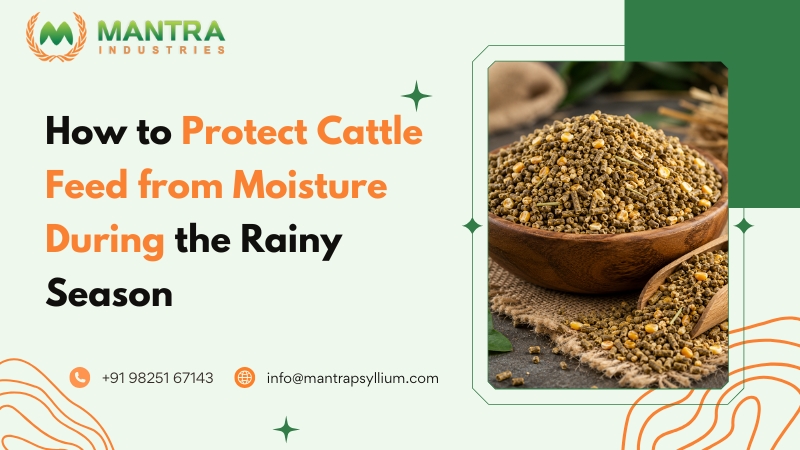
The monsoon season also results in much-needed rain, but also some problems for livestock farmers. A particular worry during this period is keeping stored cattle feed dry. Poor feed storage conditions can lower the quality of the feed, promote mould growth and allow for feed to get spoiled, which could ultimately result in unnecessary financial loss and a decrease in overall farm productivity.
Protecting cattle feed from moisture during the monsoon season is crucial to retaining the quality of the feed and ensuring cattle can have safe and nutritious feed during the wet season. If farmers adopt proper storing methods and use effective monsoon cattle feed management, they can save feed and minimize cattle feed waste.
Why Moisture Is a Major Threat to Cattle Feed
During the rainy season, humidity levels increase significantly. If cattle feed is stored in poorly ventilated or damp areas, it can quickly absorb moisture from the surrounding environment.
Excess moisture may lead to:
- Mold and fungal growth
- Reduced feed quality
- Unpleasant odor
- Nutrient loss
- Increased feed wastage
- Shorter storage life
These problems highlight the importance of cattle feed storage during the rainy season using proper handling and storage techniques.
Importance of Proper Cattle Feed Storage
Good storage practices are just as important as selecting quality feed ingredients. Proper storage helps maintain freshness, nutritional value, and overall feed safety.
Some key advantages include:
- Better preservation of feed quality
- Reduced spoilage and waste
- Lower replacement costs
- Improved farm efficiency
- Consistent feed availability throughout the season
Following the best cattle feed storage practices ensures that livestock continue receiving high-quality feed regardless of weather conditions.
Choose a Dry and Well-Ventilated Storage Area
One of the simplest ways to prevent cattle feed spoilage is to select an appropriate storage location.
A good storage area should have:
- A raised floor to prevent water seepage
- Proper roof protection
- Good airflow and ventilation
- Protection from direct rainfall
- Clean and dry surroundings
Avoid storing feed directly against walls or on bare ground, as these areas tend to retain moisture during monsoon.
Store Feed Above Ground Level
Keeping feed bags elevated helps reduce contact with moisture from the floor.
Farmers can use:
- Wooden pallets
- Plastic pallets
- Metal racks
- Elevated storage platforms
This simple step greatly improves monsoon cattle feed management by reducing the risk of water damage.
Use Moisture-Resistant Storage Bags
Storage bags play a significant role in protecting feed quality.
Whenever possible, use:
- Heavy-duty woven bags
- Moisture-resistant packaging
- Properly sealed containers
- Covered storage bins
Regularly inspect bags for tears or holes that may allow moisture to enter.
Rotate Feed Stock Regularly
One of the best cattle feed storage practices is following the First-In, First-Out (FIFO) method.
Benefits include:
- Older feed is used first.
- Storage time is reduced.
- Feed remains fresher.
- Spoilage risk decreases.
- Inventory becomes easier to manage.
This method is particularly useful during extended rainy periods.
Select Quality Feed Ingredients
To begin with, it’s important to choose dependable ingredients from reputable manufacturers when it comes to feed quality. Good quality ingredients help ensure good storage and help to preserve nutritional uniformity.
For more information on premium livestock feed products, check out our Psyllium Cattle Feed page where you’ll discover top quality feed products that are developed for today’s livestock nutrition.
Inspect Stored Feed Frequently
Regular inspections help identify moisture problems before they become serious.
Check for:
- Damp feed
- Mold formation
- Insect activity
- Water leakage
- Damaged bags
- Unpleasant smell
Early detection allows farmers to take corrective action and further prevent cattle feed spoilage.
Additional Tips for Monsoon Cattle Feed Management
Effective monsoon cattle feed management goes beyond simply storing feed in a covered area. A few preventive measures can significantly reduce the risk of moisture damage and help maintain consistent feed quality throughout the rainy season.
Keep the Storage Area Clean
A clean storage environment minimizes the chances of contamination and helps maintain feed quality. Remove old feed residues, spilled grains, and accumulated dust regularly.
Good housekeeping practices include:
- Sweeping the storage area frequently
- Cleaning feed containers before refilling
- Keeping drainage channels clear
- Preventing rainwater from entering the storage room
Maintaining cleanliness is one of the best cattle feed storage practices that supports long-term feed preservation.
Avoid Overstocking Feed
Although buying feed in bulk may seem economical, storing excessive quantities during the rainy season increases the chances of moisture damage.
Instead:
- Purchase feed according to short-term requirements.
- Store manageable quantities.
- Refill stocks as needed.
- Monitor storage conditions regularly.
This approach helps farmers protect cattle feed from moisture during monsoon while reducing unnecessary losses.
Ensure Proper Air Circulation
Good ventilation is essential for preventing humidity buildup inside storage facilities.
Simple ways to improve airflow include:
- Installing ventilation openings
- Keeping sufficient space between stacked bags
- Avoiding overcrowded storage rooms
- Opening storage areas during dry weather when appropriate
Proper ventilation helps reduce condensation, which is one of the leading causes of feed deterioration during the rainy season.
Common Mistakes That Lead to Feed Spoilage
Many cases of damaged cattle feed occur because of avoidable storage mistakes. Understanding these errors can help farmers improve their storage systems.
Common mistakes include:
- Storing feed directly on the floor
- Leaving feed bags uncovered
- Ignoring roof leaks
- Using damaged or torn packaging
- Keeping old and new feed together without rotation
- Failing to inspect stored feed regularly
Avoiding these mistakes is one of the simplest ways to prevent cattle feed spoilage and maintain nutritional quality.
Choosing High-Quality Feed Products
Quality storage starts with quality feeds. Feed from a reputable manufacturer is more consistent, has improved handling qualities and more reliable quality control.
For high quality, livestock feed solutions based on psyllium, take a look at our Psyllium Khakha Powder, which is used as a key ingredient in livestock feed formulations. Good quality agricultural inputs and good storage facilities contribute to better farm management and better use of resources.
Frequently Asked Questions
Why is moisture harmful to cattle feed?
Excess moisture can encourage mold growth, reduce nutritional quality, create unpleasant odors, and increase the risk of feed spoilage.
What are the best cattle feed storage practices during monsoon?
The best cattle feed storage practices include storing feed above ground level, using moisture-resistant bags, maintaining proper ventilation, inspecting feed regularly, and following the FIFO (First-In, First-Out) inventory method.
How can I prevent cattle feed spoilage during the rainy season?
To prevent cattle feed spoilage, keep feed in a dry and well-ventilated storage area, avoid water exposure, inspect storage conditions regularly, and use quality storage materials.
Why is monsoon cattle feed management important?
Proper monsoon cattle feed management helps preserve feed quality, reduces wastage, protects nutritional value, and supports efficient livestock farming throughout the rainy season.
Conclusion
The rainy season can present many challenges for livestock producers, but with planning, it doesn’t have to be a problem. During the monsoon season, managing moisture control of cattle feed is crucial for ensuring its quality and minimizing waste, which improves the efficiency of farm operations.
Therefore, by implementing effective cattle feed storage during the rainy season and adopting the best cattle feed storage practices, as well as taking proactive measures to prevent cattle feed spoilage, farmers can protect their valuable cattle feed stocks during the rainy season. Easy controls like dry storage areas, raised feed bags, good ventilation, changing inventory regularly and frequent inspections ensure consistent feed quality.
Quality feed ingredients and responsible monsoon cattle feed management not only protect the nutrition of livestock, but also increase the productivity of farms in the long run. Farmers can reliably weather the rains if they have the right approach to storage and good feed products to minimize losses.